Showing posts with label Booker. Show all posts

The Man Booker Prize


Since my blog features books which are award-winning and recognized, I decided that it would be good to feature awards from time to time. So I decided to start with one of the largest book awards, The Man Booker Prize.

The Man Booker prize, or more commonly known as "The Booker" is an award given to original full-length fiction novels written in the English language (which means, no translations). They are awarded to authors living in a country which is a member of the Commonwealth of Nations (all countries which were former British colonies, or Britain itself). This also means that the United States isn't included, so does the Philippines. It is chosen by a panel consisting of big names in the literary world (publishers, writers, book critics, literature professors). Publishers submit their candidates and suggest other books to be part of the reading list, a panel member may also suggest a book not on the list. It is a very tiring process as they have lots of books to read, with this year reaching a record number of 132 books!

The Booker is one of the most prestigious book awards, comparable to that of Cannes or the Oscars for film. Just being part of the longlist is a big deal, so getting shortlisted, and ultimately, winning, would rocket the author to literary stardom. A few of the literary stars which have either won or were shortlisted for the booker are Salman Rushdie, Kazuo Ishiguro, Zadie Smith, J. M. Coetze, Ian McEwan, Arundhati Roy, and many more. The shortlists create quite a huge buzz, which signals the start of "Booker Shortlist Marathons," and certain predicitons on who would win. They are also huge since most books which are shortlisted have also been nominated, or have already won other awards. Below is a short video featuring the nominees of the 2001 Booker Prize. This Shortlist created quite a stir especially since all of them have other nominations and wins connected with them. A lot of people were surprised how The True History of the Kelly Gang, won over The Dark Room which won the LA Times award of that year. What made the win even more of a controversy and surprise is its triumph over Atonement, considered one of the great works of the new millennium, which have already been shortlisted for several awards (Whitbread, JT-Black) and continued on to win the following year's NBCC and LA Times.


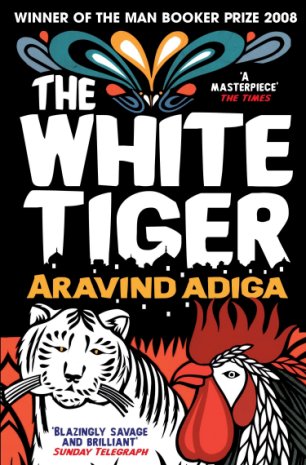
The awards started in 1968 and has had a huge following since then. The first winner was P.H. Newby's Something to Answer For. The latest winner, 2008, was Aravind Adiga's The White Tiger. For me, The Booker is quite a dependable award when you're looking for a great read, though from time to time, it misses the mark. With Booker winners, you only get extremes, its either its really good or really bad, depending on your taste. Below is another video (now longer) on the history of the Booker Prize, surprisingly it is quite under-viewed based on the hits it got on Youtube but it's really fun, lively, and informative.

Here are some highlights of the video:
  • Yann Martel (The Life of Pi) gets overly ecstatic upon winning his much-deserved prize. Wow, we can really see here how big of a deal it is to get one. He seems so happy... :D
  • Penelope Fitzgerald (Offshore) talks about squandering her 10,000 pounds. That's a lot of money, I didn't know that a writer can earn that much.
  • Arundhati Roy talks about how her novel is inspired by the things she sees on the street. It's very touching, we feel how much heart she put into writing The God of Small Things.
  • DBC Pierre (Vernon God Little), real name Peter Finlay, a former drug-addict with a made-up pen name accepts the award. I didn't know Booker winners can be this wild.
  • Allan Hollinghurst (The Line of Beauty) creates a stir after his novel, which features a homosexual protagonist and focusing on the issue of AIDS, wins the Booker.
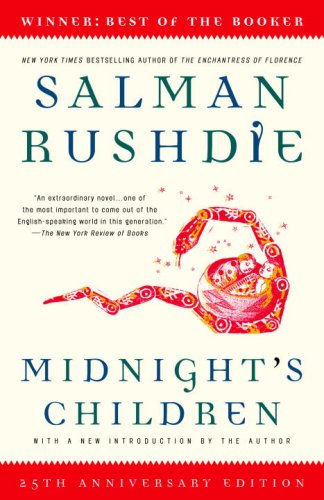
  • Salman Rushdie's Midnight's Children wins the award as being the best Booker winner for both its 25th and 40th anniversary.
  • Now my favorite, John Walsh, a writer (not a Booker winner) gives his concept of a classic Booker shortlist, together with winners I think fits the description the closest:
"There's always...
  1. a book on India (White Tiger?)
  2. a tremulous introspection by a lady in her 50s (Blind Assassin?)
  3. a long historical novel (Midnight's Children?)
  4. an eccentric one, which isn't really quite a novel (I have no idea what this means... - maybe the "non-fiction novels" like Schindler's Ark)


There have been several versions of the Man Booker Prize which gives the chance to other countries. One is the Russian Booker prize started in 1992. Another is the Man Asia Prize started just recently, 2007, and where our very own Miguel Syjuco won last year for his novel, Ilustrado (does anyone know where to get this, if ever it has been published? I've been looking for it for so long).

All in all, the Man Booker prize is a celebration of the world's great literature, even giving chances to the young authors, which aims to give recognition and bring attention to the seemingly fading world of books.

Since I have only recently started on reading full-length novels, I decided to read the more recent ones and other great winners (White Tiger, Inheritance of Loss, The Gathering, Life of Pi, The Blind Assassin, The God of Small Things, The English Patient, Midnight's Children). Any other Booker Prize winners you guys would like to suggest?

Here is this year's (2009) Booker Calendar:
  • July 26: Booker "Dozen" (Longlist)
  • September 9: Booker Shortlist
  • October 14: Booker Winner
Here is their official website: Man Booker Prize

The Life of Pi - Yann Martel


Title: The Life of Pi

Author: Yann Martel

Year Published: 2001

Awards/Recognitions: 2002 Man Booker Prize, 2001 Governor General's Finalist, 2003 Boeke Prize (South Africa)

After reviewing a Man Booker Prize winner which I personally think is not worthy of the award, I will be reviewing one which more than deserves it, even lacking the recognition its worth. The Life of Pi is one phenomenal book by Canadian author Yann Martel.

The book talks about a young Indian boy named Piscine "Pi" Patel who gets lost at the Pacific Ocean while his family was emigrating from India. He was able to save himself from the shipwreck and climb into a boat, there was only one problem: he was joined by a menagerie of animals including a humongous Bengal Tiger. The entire book basically tells how Pi manages to survive the ocean with only a limited supply of food and a huge tiger as a "roommate." The story is narrated by Pi himself while he was being interviewed by the authorities regarding the shipwreck; this was difficult for Pi especially since he has to convince his interrogators that he spent a few hundred days in a boat together with a vicious animal, and survive.

Martel is able to narrate Pi's amazing story with great detail and an engrossing narrative. He keeps the pace quite fast without losing the content. He talks a lot about religion, including an enlightening overview of the world's major religions in the novel's first few chapters. Yann Martel also gives out some basic and practical survival tips that can become useful once lost in sea. He was able to write a book which mixes adventure, philosophy, and spirituality.

What makes this book exceptional are its mind-blowing final chapters. This ending is actually one of the main reasons I became interested in reading fiction novels when I encountered it a few years ago. It is one which will make you think and persuade you to read the book again even though you've just finished it. I have yet to encounter any other ending which matches up to this one. So what exactly does this ending contain? Well let's just say that it turns the whole story around.

"The Life of Pi" easily makes its place into one of my all-time favorite books, considering its one of the first full-length novels I've read. It's a bit disappointing however that the book is only capable of winning a few major awards like the Booker since the author is Canadian and most major prizes (Pulitzer, NBA, NBCC, Whitbread) is limited only to American and British authors. I was also surprised how this book failed to make it to a major book list called the Time 100 Best English-language novels, even though its more deserving than most of the ones that made it.

"The Life of Pi" is a fresh, amazing, and though-provoking book. I highly highly recommend this book.

Rating: 10/10

Favorite Passages:

"If you take two steps toward God, God runs toward you"

"Life on a lifeboat isn't much of a life. It is like an end game in chess, a game with few pieces. The elements couldn't be more simple, nor the stakes higher."

Edition: Mariner Books Paperback

Length: A bit over 400 pages.

Time Read: 3 Days

The White Tiger - Aravind Adiga


Title: The White Tiger

Author: Aravind Adiga

Year Published: 2008

Awards/Recognitions : 2008 Booker Prize Winner

I bought this book right after it was announced the winner of last year's Man Booker Prize expecting a good read, but I was a bit disappointed.

"The White Tiger" is a novel composed of letters from Balram Halwai, nicknamed the white tiger, to the Premier of China, narrating his rise from rags to riches. This story isn't your regular rags to riches story with overwhelming amounts of luck wonderful people who help in achieving each other's dreams, and the perfect soulmate but one which includes heinous crimes. Balram narrates how he had to make his way to the top while contrasting the extreme poverty of the town he grew up in to the extreme wealth of the people whom he later worked for in New Delhi. This book is all about extremes, looking at opposite sides of the picture with vivid imagery. Though in doing this, we fail to see India as a whole, we fail to see its good side and its good people.

Adiga then makes up for his biased views with writing with metaphors and personifications in a grand scale. He was able to utilize these figures of speech to bring the reader to a world of filth, anger, lust, and greed. One example is when he made the whole city of New Delhi speak to Balram and persuade him to commit his crime, giving the reader a chill of foreboding that one gets when walking at dark streets.

If there was one thing I remember from reading this book is how much I hated the main character, Balram. At first, you will be on his side, knowing about the difficulties he suffered as an impoverished child but as the story progresses your sympathy then plummets to a zero up to the point where you get to loathe him. His pride and self-centeredness overflows from the book. Even if there are times where he tries to justify his actions, it doesn't really work unlike that of Nabokov's Humbert.

"The White Tiger" is one of the less known Booker prize winners, winning no other prizes and garnering no other, if not a few, recognitions. This is probably due to its overly simple plot using an overly used setting without really bringing something new to the table, it probably just won because of some great literary techniques thrown in. The novel is easily overshadowed by other Booker Prize winners which used India as its focus or setting such as Desai's The Inheritance of Loss, Roy's The God of Small Things, and Rushdie's Midnight's Children.

The novel is basically "Slumdog Millionaire" minus the game show, Latika, and all of the kind-heartedness, then add in theft, prostitution, and murder. I do not really recommend this book, but if you want to read something new and is comfortable with a simple plot and all the grime of India's extremes, then go ahead.

Rating: 5/10

Favorite Passage: "The story of a poor man's life is written on his body, in a sharp pen (The White Tiger)"

Edition: Atlantic Books Paperback

Length: A little over 300 pages.

Time Read: 1 Day

Midnight's Children - Rushdie


Title: Midnight's Children

Author: Salman Rushdie

Year Published: 1981

Awards/Recognitions: 1981 Man Booker Prize, 1981 James Tait Black Memorial Prize, Booker of Bookers (25th Anniversary), Best of the Booker(40th Anniversary), Time's 100 Best English-language Novels

As I've said earlier, I only buy/read books which I have already researched, and Midnight's Children is one of the books that I haveencountered which seemed superfluous to my expectations. Not only did it win the Man Booker Prize, but it also claimed the recognition of being the best of the receipients not only from the 25 years of its conception, but also in its40 years! Aside from that, it made its way into Time's list of 100 Best English-language Novels since 1923 (my favorite list, since it seems very credible, though I do think that some novels shouldn't be there, and that they overlooked quite a number of other novels such as Ayn Rand's Atlas Shrugged).

Midnight's Children is told through the voice of Saleem Sinai, an Indian born at the exact same time as India's independence, thus making him the country's twin. Thus, as we follow Saleem's story, we can see its paralellism with India's own, while at the same time giving us a crash course on the country's modern history. The parallelism is masterfully done making it flow smoothly and not in a way where you'd think that it's forced or pilit. We follow him, not beginning with his birth, but beginning with his grandparents' unusual love story, then to the story of his parents, which then leads up to his birth. He starts way back since he believes that you are shaped by things that have influenced you, including your family's history; and true enough, by knowing the stories of Saleem's family, we get to know him better. Though later on in the book, we'd get to know that the story of this family should be irrelevant to him, but since I don't want to drop any spoilers, just read it, to see how that happened and how it all turns out ;D We then follow him through his charmed childhood, troubled adolescence, and to his time in the war. Rushdie's way of going back to history to be able to look at the bigger picture makes a lot of critics say that if Colombia's epic cultural book is Marquez's One Hundred Years of Solitude, and Germany has Grass' The Tin Drum, then India's would have to be Midnight's  Children. (what would be the Philippines' big book?)

 This novel contains a lot of magic almost all surrounding that midnight of India's indpendence. The title refers to the the 1001 children born during the first hour of independence (12 - 1 AM), they're not special only because some of them have been chained to a fate similar to that of their countries, but also because they have magical powers. Yes, superpowers. The powers vary depending on the proximity of the time of birth to midnight. For example, the two people born at the extract stroke of midnight have the strongest powers: Saleem with telepathy (reading/communicating with people's minds), and Shiva with the powers of war and destruction. Then there's Parvati, an essential character in the novel, who was born a few seconds after midnight, who possesess the ability to master witchcraft, which includes spells and healing. Finally, those who were born at the late minutes of the hour were gifted, or maybe cursed with mere abnormailities such as an elephant's nose, and the like. At first it would seem like it has become Heroes, or DC, or Marvel, but as the story progresses we could see how Rushdie doesn't focus much on the powers themselves, but on the characters, and how they handle their lives with this. The novel doesn't revolve around these League of Extraordinary Children and their powers, but it revolves around something greater, something better. I know that this is something you wouldn't really expect from a book with this much critical acclaim (since most of the time, critics like serious books), but it actually works to the advantage of the novel. If you decide to read the book because of this element in the story, then that would be good, though keep in mind that you would have to go deeper than this to see the real beauty of the book.

Another good thing about this book is that it gives a wider picture of India ranging from the murky waters of the rivers of India's slums, the cleanliness and luxury of Methwold's Estate (India's version of Long Island), the harsh conditions of India's forgotten war, and even a brief overview of Pakistan (not Palestine, a mistake I made in Visual Bookshelf :|). It is unlike many Indian novels I have read, with Aravind Adiga's White Tiger focusing only on India's extremes: the richest of the rich, to the poorest of the poor, and Kiran Desai's Inheritance of Loss showing only the life in the province.

Rushdie's masterful narrative is nothing short of compelling, tackling universal isues such as the power of history and memory, patriotism, creation and destruction, and many more. Midnight's Children is an instant classic which I'm sure we'll be seeing much of in the future.

I highly recommend, if not require you to read this book, the setting is fully established, the characters are very well-written, the story is fast-paced and entertaining, and it makes you think.

Rating: 10/10

Favorite Passage: "The things that matter most in our lives happen in our absence."

Edition: Random House Trade Paperback 25th Anniversary (the big one, not pocket-sized)

Length: A little over 500 pages, just all right.

Time Read: 2 Days, while in the province